A complete view of my project portfolio across control systems, robotics, and industrial IoT.
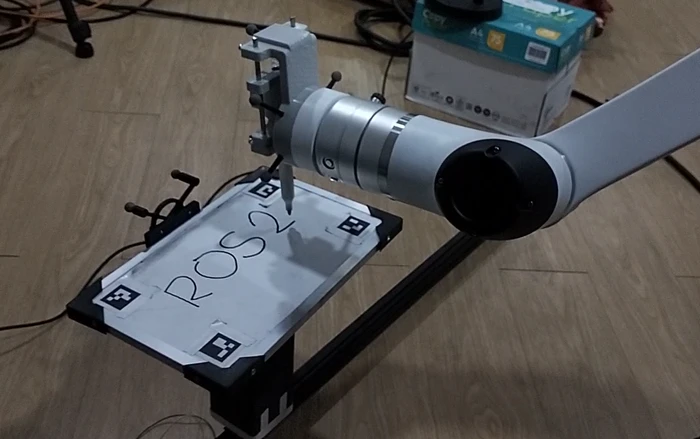
Undergraduate thesis: PBVS + LTV-MPC control architecture guiding a 6-DOF arm to trace geometry on a target board moving at up to 6 cm/s, using an optical tracker and Kalman/error-state filtering for sub-millimeter accuracy.
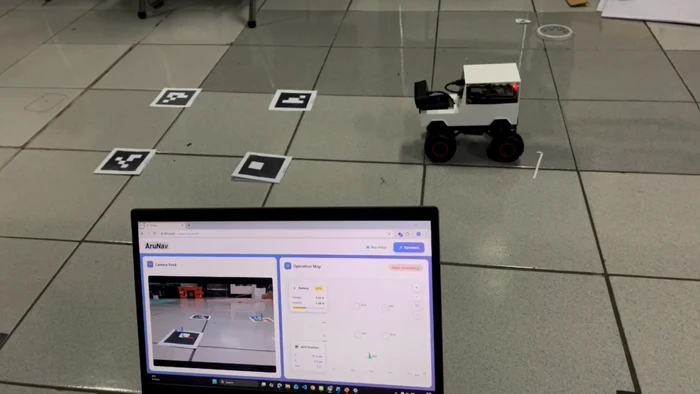
Low-cost indoor localization for AGVs using only ArUco markers and a camera, built with ROS2 and OpenCV on Raspberry Pi, with a web interface for map management and live tracking.
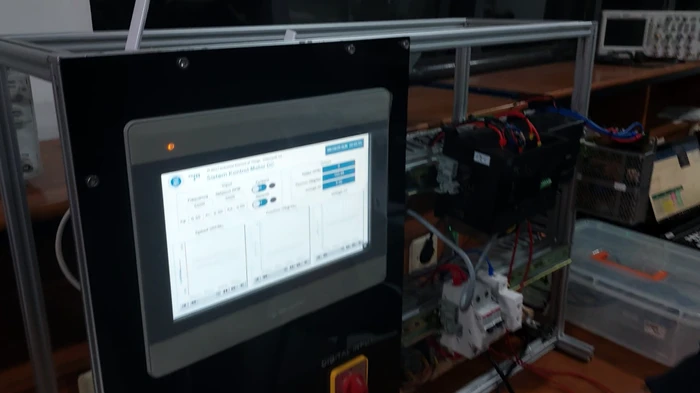
PID speed control of a DC motor on an Omron CP2E PLC, with a Weintek HMI and a Node-RED web dashboard over MQTT that also logs every input and output to PostgreSQL.
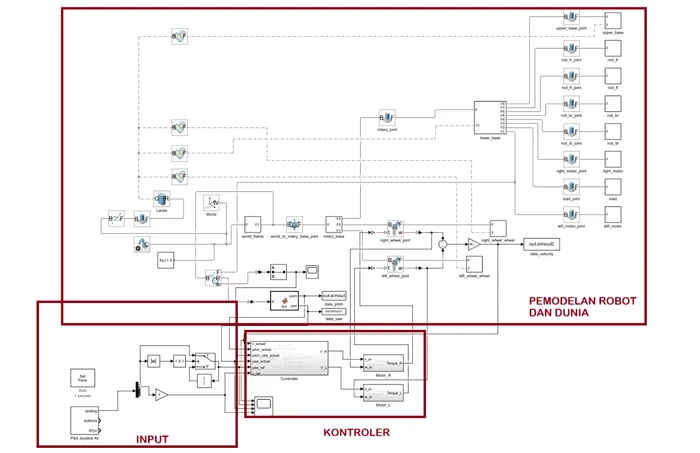
Decomposed LQR-PID control architecture for a two-wheeled self-balancing robot, derived from first principles and validated in a MATLAB/Simulink/Simscape simulation.
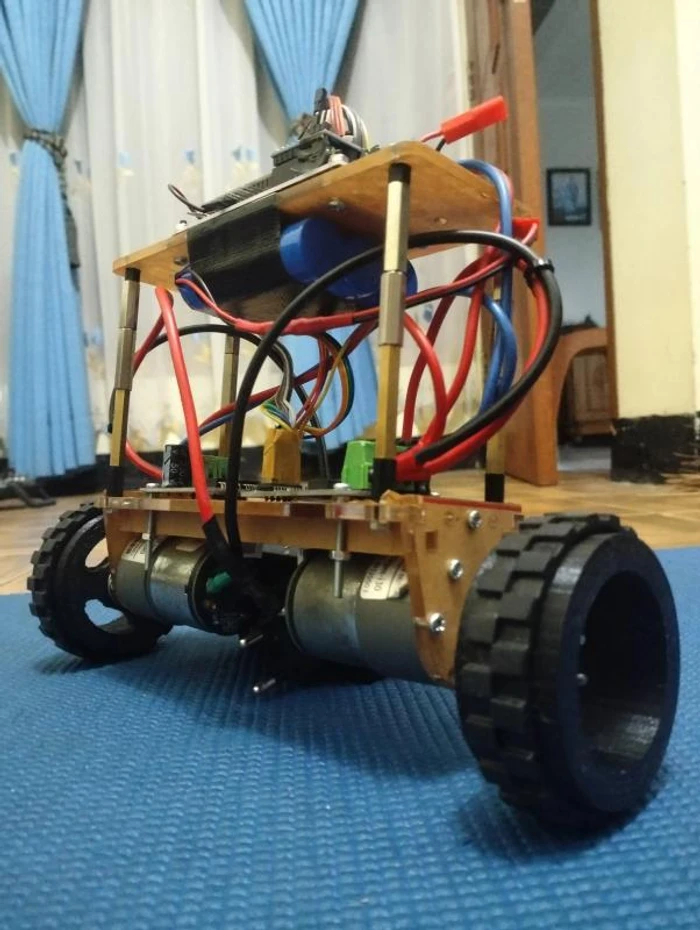
A two-wheeled self-balancing robot built on an ESP32, using a PID controller on tilt angle and joystick driving.
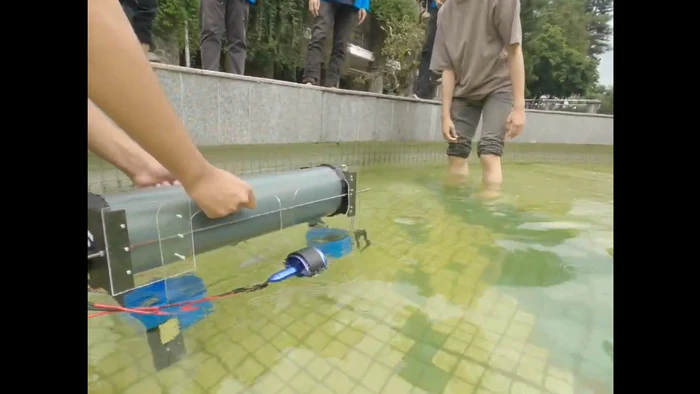
Propulsion and a hardware kill switch for an underwater vehicle built by a 12-member BORO team, which passed the video qualification for the Singapore AUV Challenge 2025.
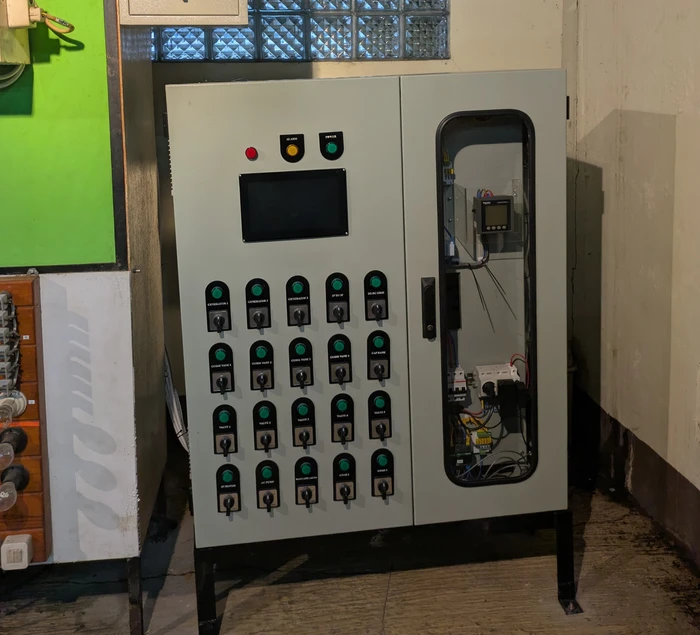
Control and monitoring panel for a micro-hydro training and demo kit: an ESP32 reads flow, pressure, and power sensors over Modbus and streams them via MQTT to a Node-RED HMI. Installed at Heksa Hydro.
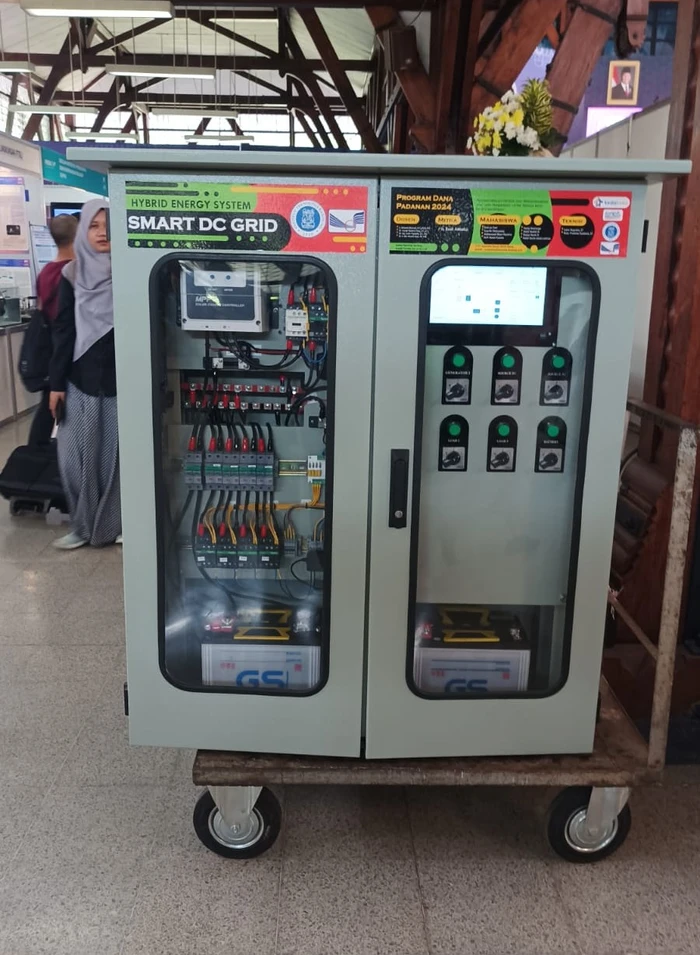
Training and demo kit: a low-speed wind turbine with composite blades and a Smart DC Grid control panel (ESP32 controller, MPPT, batteries, Node-RED HMI), built under the Kedaireka 2024 matching-fund program and exhibited at PRIMA ITB 2024.
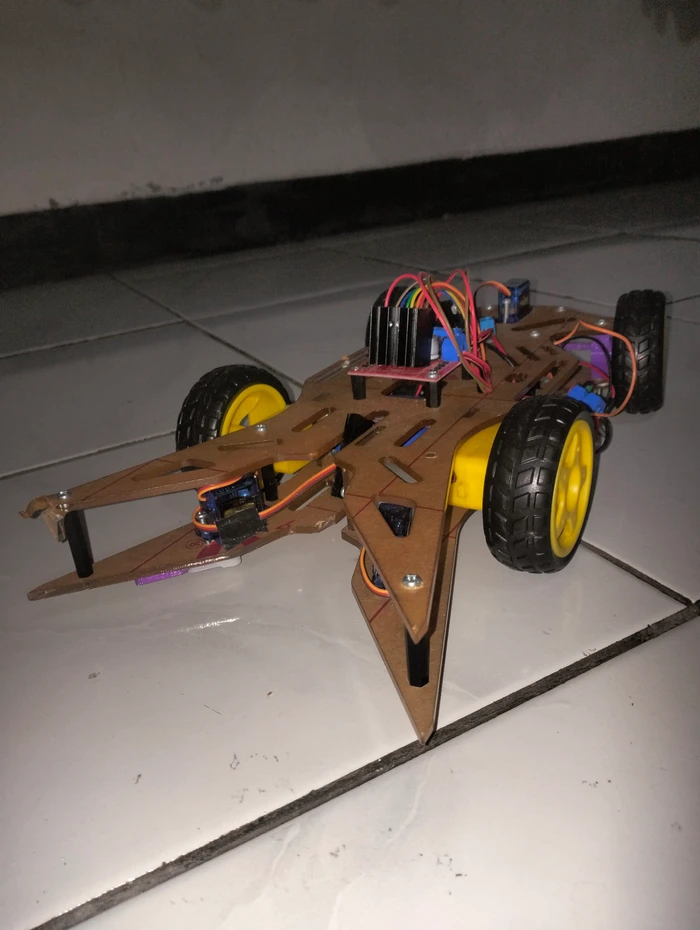
A wirelessly controlled ESP32 robot car that plays soccer by pushing the ball into the opponent's goal, with a custom power distribution board. Awarded Best Design in the Engineering Physics Laboratory II project.
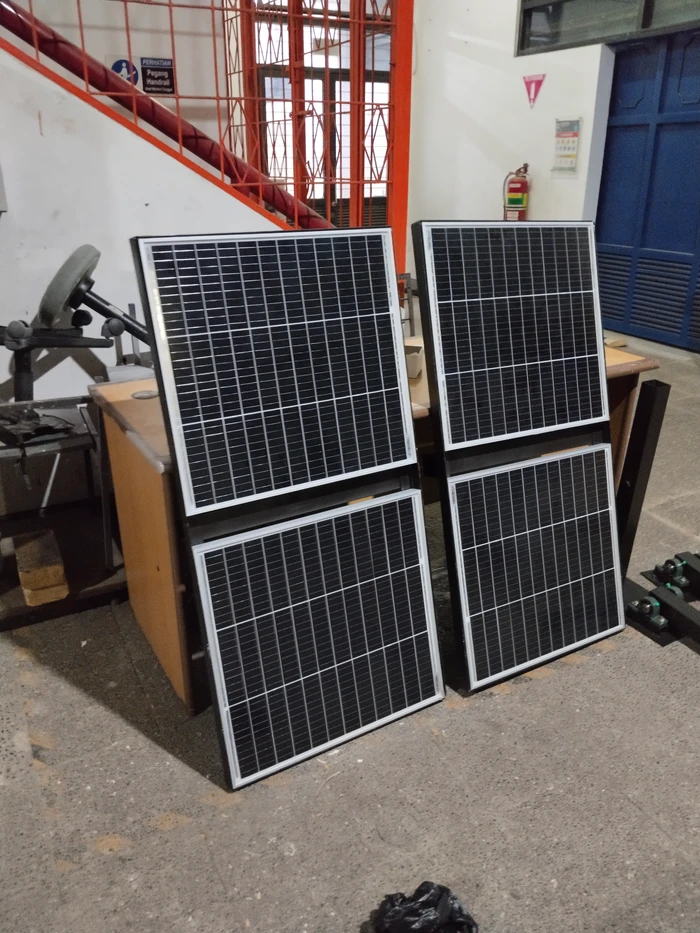
A solar panel that follows the light: four LDR sensors and two linear actuators, driven by an ESP32, turn the panel toward the brightest direction.
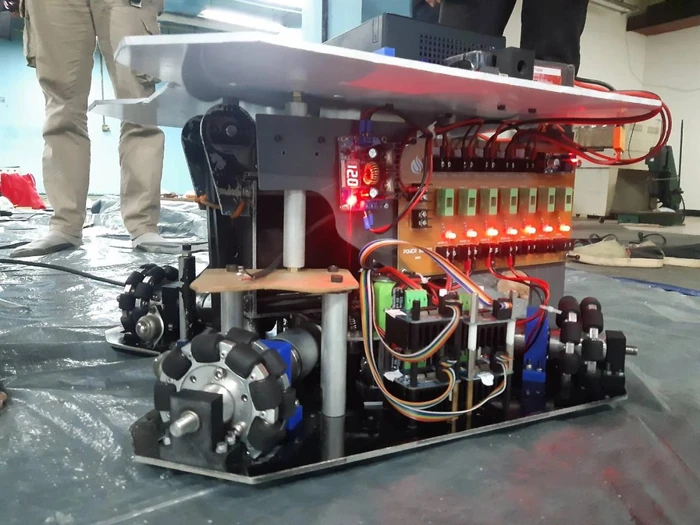
Bringing an idle omni-wheel robot back to life, from motors and an STM32 controller up to keyboard teleoperation over ROS. The final project of the Dagozilla training at ITB.
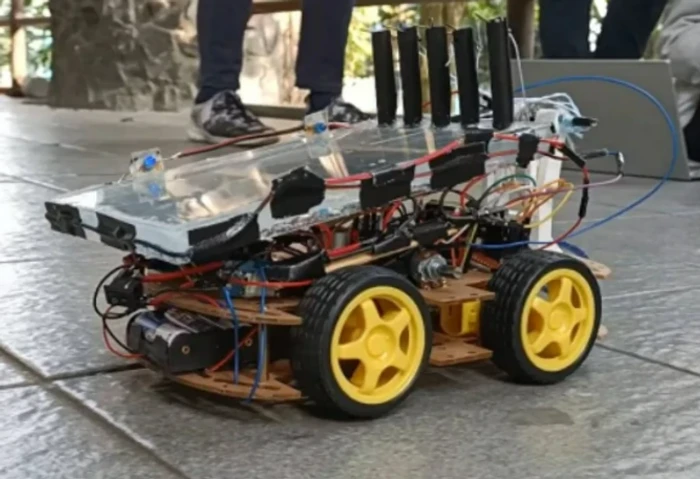
A battery-powered Arduino car, charged by solar cells before the run, that must stop at an exact distance. Ink dripping into a water container over a solar cell gradually blocks the light, and the resulting voltage drop triggers the stop.